c. 3000 BCE
Eridu
Sumer · Mesopotamia
Among the earliest cities on earth, and the one Sumerian tradition itself named first.
Four of the world's first cities rose within a few centuries of one another, three thousand years before Christ — on four separate continents. No one has fully explained why.
Every site below is real. Every date is drawn from the archaeological record. Only the thread connecting them is fiction.
Among the earliest cities on earth, and the one Sumerian tradition itself named first.
Monumental stone architecture appears, seemingly without a long apprenticeship.
Pyramids and planned plazas in the Americas, contemporary with the Old World's first cities.
The founding horizon of Chinese dynastic tradition, and its first true urban centre.
And at Dholavira and Lothal, older than all of them, a civilisation whose writing we still cannot read.
This is a novel, not a thesis. It asks a question it does not answer, and it takes care to be accurate about everything except the story itself.
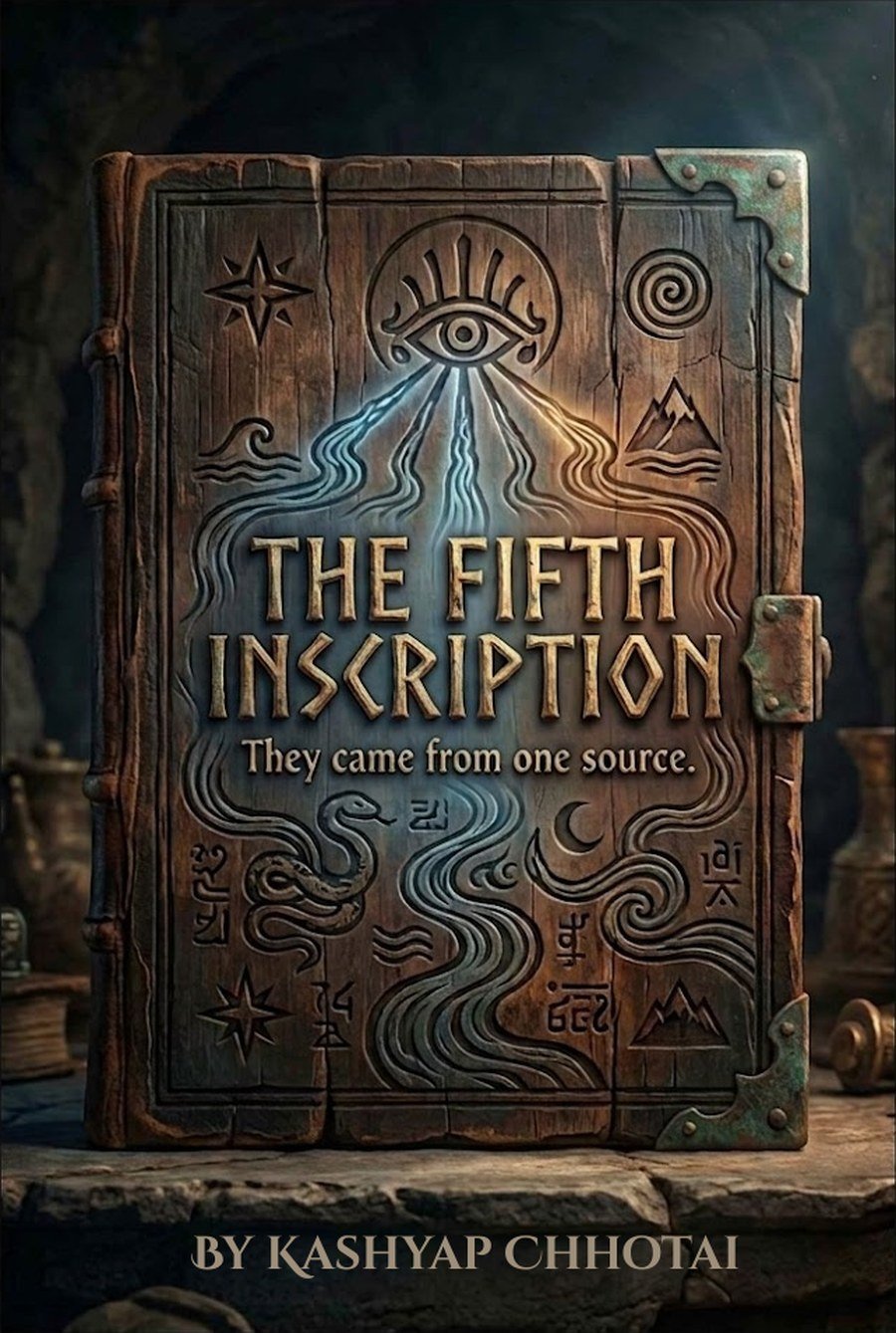
In the silence after Kurukshetra, four survivors walk away from the wreckage of a world and out past the edges of the known map. What each of them builds, alone and unaware of the others, the modern world will one day dig up and call the beginning of civilisation.
Four thousand years later, archaeologist Dr. Maya Rao finds a mark on a copper tablet that should not exist — and then finds it again, on the other side of the world.
The Fifth Inscription moves between the ancient thread and the present day, across real excavations and verifiable dates, toward a pattern its characters can see long before they can explain it.
Sent to you immediately. You'll also be the first to know the day the book goes live, and you'll get the launch price.